

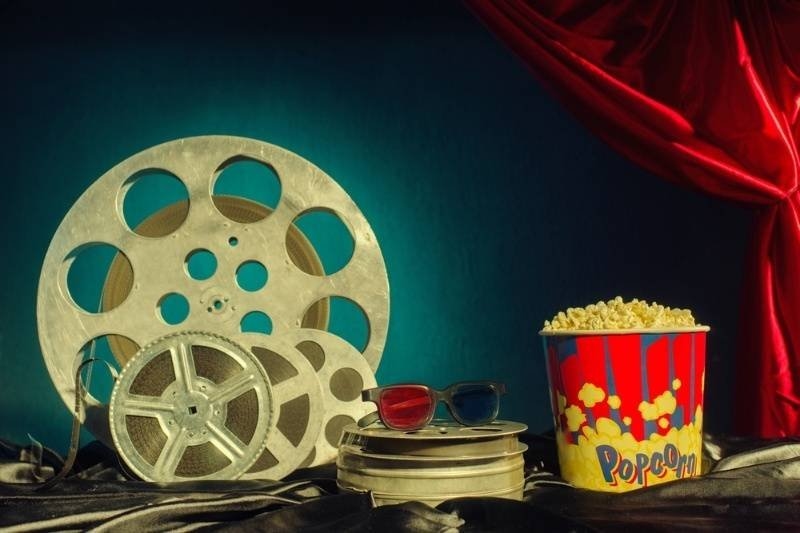
Movies were not immediately ready when they were born. They developed, little by little, as each change in technique or ideas came about. There were first cameras that took pictures of motion and then cameras that edited together the moments. Add sound, color, widescreen, computers, and streaming platforms—film took new turns forever, altering the way we watch.
But cinema history is more than mere gadget history. It's more of a thing than an invention. Let's take a ride on this crazy train that began when nobody played sound-by-reel reels and culminated in today's day-and-age of digital, on-demand, everything!
In the early days, it was a mere curiosity: can you bottle a motion, save it for later, and play it back? Toward the end of the 19th century, filmmakers and photographers were experimenting with brief movies, mostly depicting the ordinary but not extensive stories.
Eventually there was a breakthrough. Filmmakers saw that their cameras could not only replicate reality but also create it. Editing, close-ups, staged scenes, camera moves, and actual stories: early cinema slowly built its own language, learning to control what people saw, when, and how they felt about it.
There wasn’t just one “first” film. Lots of people cooked up their own techniques around the same time. Film shows popped up everywhere. Directors started playing with storytelling tricks, each pushing things forward in their own way.
Georges Méliès changed movies into magic performances and dreams. Edwin S. Porter discovered a way to create stories by synthesizing scenes of his narratives. While the legacy of D.W. Griffith is marred by racist themes, he revolutionized the use of the camera and the creation of drama, bringing the story together.
Cinema’s history isn’t neat and tidy. There’s progress, but there’s ugliness, too.
And here’s the thing—Silent films weren’t really silent, not if you were sitting in a theater. Musicians played live, and intertitles gave you snappy dialogue or plot points.
The power of these films came from how much they could say with just a glance, a gesture, a perfectly timed cut, or a clever bit of movement. It was the small details that were important: lighting, costumes, and music.
The techniques filmmakers came up with during the silent film era are still alive in movies today. A close-up lets us see raw emotion without a single word. Editing pulls tension out of thin air, even when no one is saying anything. Physical comedy? That’s still all about nailing the perfect bit of visual timing.
Buster Keaton and Charlie Chaplin were masters at building unforgettable characters just by how they moved. Silent films didn’t just borrow from theater—they proved that movies had their own, unique way of telling stories.
That was huge for cinema’s evolution.
Then sound came along and changed everything. Talkies exploded in the late 1920s, and suddenly, commercial success meant giving characters a voice. Now there was natural conversation, songs, sound effects, accents, and real music—all woven into the storytelling.
Of course, adding sound wasn’t all smooth sailing. Microphones were clumsy, cameras made too much noise, and plenty of actors from the silent era couldn’t make the jump.
It was kind of an awkward phase for movies, honestly.
Actors didn’t have to rely so much on big, exaggerated gestures anymore. Words took center stage, and good writing now mattered more than ever.
Genres shifted, too. Musicals, gangster films, screwball comedies, and wordy dramas began to spring up. And this, along with sound, gave filmmakers a new weapon in their arsenal to build suspense: sometimes what you hear is the thing that haunts you more than what you see.
Technical advances continued to roll on. Cameras, lenses, lighting, film, and editing all improved. Over in Hollywood, the studio system split moviemaking into specialized departments.
Directors, cinematographers, editors, designers, composers, costume crews, and actors all settled into a more structured way of working.
But it wasn’t just about technology. Making films on a larger scale also changed the business side. Big studios could churn out more movies, build up stars, and send films out to audiences all over.
Color started out as a special trick and eventually became a must-have. Technicolor left its mark on musicals, dramas, and adventure stories, especially.
Widescreen came next. That bigger frame changed the way landscapes, battles, huge crowds, and spectacle hit an audience.
Movies got bigger and bolder visually—but black and white films never completely vanished. Directors still pick it for certain moods, historical periods, or pure style.
After World War II, cinema started shifting away from one look and feel. New film movements all over the globe started to defy the old rules, especially the Italian Neorealism, the French New Wave, Japanese film, and others.
Films became more international.
The movement of Akira Kurosawa, Ingmar Bergman, Federico Fellini, and François Truffaut, as well as others, began to try to challenge previously accepted notions about film editing, acting, realism, and vision control. What they did ended up shaping generations of filmmakers everywhere.
At this point, technology wasn’t the only thing driving cinema’s changes. Artists were fighting for new voices, too.
When digital cameras arrived, everything sped up again. Now, filmmakers didn’t need expensive film stock or long trips to the lab. Shooting, editing, coloring, and releasing a movie got cheaper and easier—even indies could make and share films that once required a studio’s resources.
Computer-generated imagery—CGI—took things further. You could make worlds from scratch, change actors, or shoot scenes that would’ve been impossible before.
And cinema kept evolving.
Then streaming hit. People started watching movies not just in theaters, but on TVs, laptops, tablets, and phones. The theatrical debut became just one of many ways to find an audience.
Streaming changed how we watch, too. Now you can pause, rewind, binge a whole trilogy in a weekend, or finally watch that classic everyone’s been recommending for years.
That’s changed what gets made. Now, we’ve got algorithms helping decide what’s next, films and series trading places, and the lines between big screen and small screen getting blurry.
| Cinema Stage | Major Change | Effect On Filmmaking |
|---|---|---|
| Early cinema | Motion pictures | Created the medium |
| Silent films | Visual storytelling | Strengthened editing and physical performance |
| Sound era | Dialogue and recorded audio | Changed acting and writing |
| Color era | Realistic or expressive color | Expanded visual design |
| New Wave era | Experimental storytelling | Challenged established rules |
| Digital era | Digital cameras and CGI | Lowered barriers and expanded effects |
| Streaming era | Online distribution | Changed access and viewing habits |
But movie history is messy. Old methods almost never disappear for good—they just hang around and show up where you least expect them.
The technology has shot from flickering black-and-white frames to massive CGI universes, but one thing hasn’t changed: people love seeing stories, laughter, fear, drama—all the pieces of being human—played out on the big screen. Each big leap—whether it was adding sound, bringing in color, going digital, or moving to streaming—just gave filmmakers more freedom to try new things.
And it’s worth remembering: technology is only part of the story. Audiences are the real judges of what lasts. Directors and creatives put new features to the test every time they tell a story. Cinema is still alive because it keeps finding ways to adapt to both culture and technology.
Right around the early 1900s. Before that, people watched movies at fairs or converted halls—anywhere you could string up a screen. The idea of a place just for movies came later, once the public got hooked.
Turns out, the early filmmakers had it rough. The gear was tricky, film reels cost a lot, and nobody was used to watching movies yet. So they started with short clips—little visual experiments.
There wasn’t one. In the very beginning, filmmakers tried everything at once—documentaries about real life (“actualities”), goofy comedies, trick films, travel scenes, and quick stories. Genres came later.
Basically, digital tech made them easier to pull off, and modern effects made the depth look cooler and more believable. Blockbusters and action flicks jumped on 3D because it worked well for big visuals.
Not completely. Streaming’s changed how lots of us watch stuff, but movie theaters still offer something different—huge screens, surround sound, and watching as a crowd. Sure, their role might shift, but they’re not vanishing just yet.
This content was created by AI